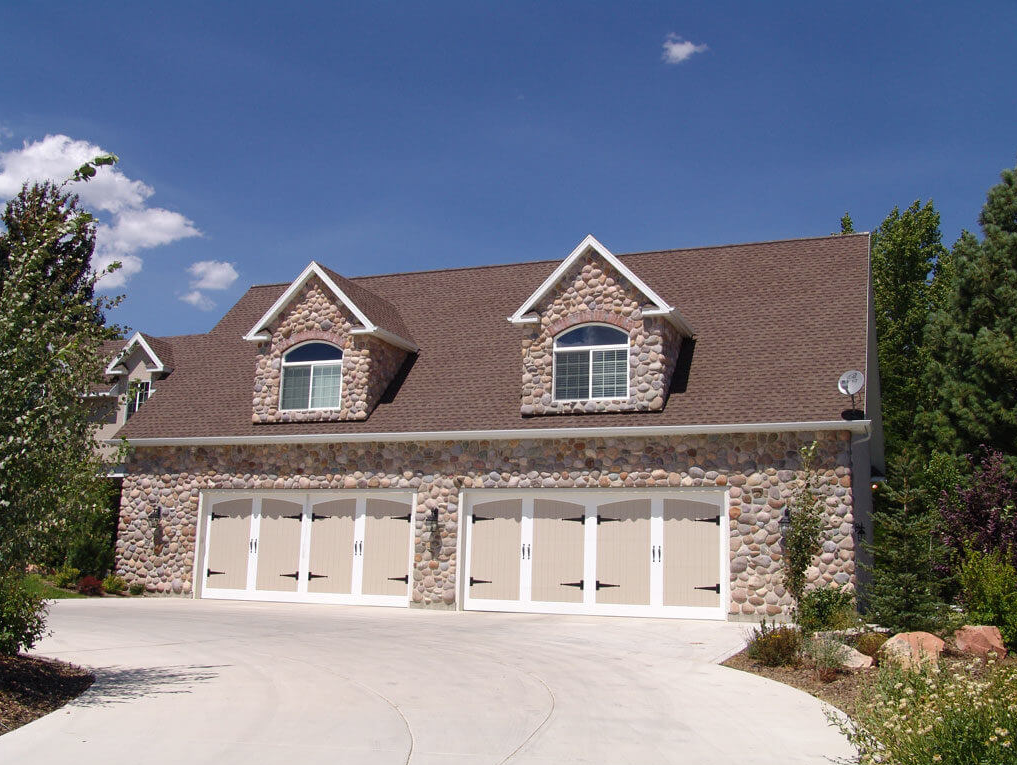
Your garage door is the largest moving part of your home. In many Chicago houses, it is also the least insulated surface on the entire building envelope. If your garage shares a wall with your kitchen, living room, or bedroom, that uninsulated door could be costing you real money every heating season.
But does insulating a garage door actually make a measurable difference? The short answer is yes, but the details matter. Let’s break down what garage door insulation does, how it works, and when it makes financial sense for Chicago homeowners.
Understanding R-Value: The Insulation Metric That Matters
R-value measures a material’s resistance to heat flow. The higher the R-value, the better the insulation. A single-layer steel garage door with no insulation typically has an R-value of around 0-2. An insulated garage door can range from R-6 to R-18 or higher, depending on the insulation type and thickness.
For context, most building codes require exterior walls to have R-13 to R-21 insulation. If your garage door has an R-value near zero, it is essentially an uninsulated wall in your home’s thermal barrier.
Keep in mind that R-value is not the only factor. Air sealing matters just as much. An insulated door with poor weatherstripping will still leak heat. The best approach combines a high R-value door with tight seals around all edges.
Insulated vs. Uninsulated Doors: The Temperature Difference
Studies and field tests consistently show that an insulated garage door can keep the interior temperature 10 to 20 degrees warmer than outside conditions. In a Chicago winter where temperatures regularly drop below zero, that means the difference between a garage at negative 10 degrees and one at 10 degrees above zero.
That temperature buffer matters for several reasons:
- Vehicles start more reliably in moderately cold garages than in sub-zero ones
- Pipes running through the garage are less likely to freeze
- Stored items (paint, adhesives, liquids) are protected from extreme cold
- Rooms sharing a wall with the garage stay warmer, reducing furnace demand
If you use your garage as a workshop, home gym, or hobby space, insulation is even more valuable because it makes the space usable year-round.
Polystyrene vs. Polyurethane: Two Types of Garage Door Insulation
The two most common insulation materials used in garage doors are polystyrene and polyurethane. Each has distinct characteristics that affect performance, cost, and durability.
Polystyrene (EPS) Insulation
Polystyrene insulation comes as pre-cut rigid panels that fit into the recesses of a garage door panel. It is the same type of foam used in coolers and packaging.
- R-value: approximately R-3.5 to R-4 per inch of thickness
- Cost: lower upfront cost, available as DIY insulation kits
- Fit: panels sit inside panel frames but are not bonded to the door
- Noise reduction: moderate sound dampening
- Structural impact: does not add significant rigidity to the door
Polyurethane (Spray Foam) Insulation
Polyurethane insulation is injected as liquid foam between the front and back panels of a garage door, where it expands and bonds to both surfaces.
- R-value: approximately R-6 to R-6.5 per inch (nearly double polystyrene)
- Cost: higher upfront cost, typically factory-installed
- Fit: bonds to door panels, creating a permanent insulation layer
- Noise reduction: superior sound dampening due to density and bonding
- Structural impact: significantly increases panel rigidity and dent resistance
For Chicago homeowners who want maximum energy savings and are investing in a new garage door installation, polyurethane-insulated doors deliver better long-term value despite the higher initial price.
Attached vs. Detached Garage: How Location Affects Energy Impact
The energy savings from an insulated garage door depend heavily on whether your garage is attached to or detached from your home.
Attached Garages
Most Chicago homes have attached garages that share one or two walls with the heated living space. In this configuration, your garage acts as a buffer zone between the outdoors and your home. An insulated garage door significantly reduces heat transfer through the shared wall.
According to the U.S. Department of Energy, air leaks and poor insulation in attached garages can account for a noticeable portion of a home’s total energy loss (source: energy.gov). An insulated door, combined with a well-sealed wall between the garage and the house, minimizes this loss.
Detached Garages
If your garage is not attached to your home, insulating the door will not directly affect your home’s heating bills. However, insulation still protects vehicles, stored items, and plumbing from extreme cold. If you use the detached garage for any purpose beyond parking, insulation makes the space more functional.
Energy Cost Savings: What Can You Actually Expect?
Exact savings depend on your home’s size, existing insulation, heating system efficiency, and energy prices. However, several general estimates give a reasonable picture:
- Homes with uninsulated attached garages can lose up to 15-20% more heat through the garage wall boundary during winter months
- Replacing an uninsulated door with an R-16 insulated door can reduce garage-related heat loss significantly
- Most homeowners report annual energy savings of $100-$200 after upgrading to an insulated door, with the door paying for the difference in 5-8 years
The savings increase if you also seal the garage’s other weak points: the door between the garage and the house, any windows, and wall penetrations for electrical and plumbing.
When an Insulation Retrofit Makes Sense
If your current door is structurally sound and you are not ready for a full replacement, adding insulation panels to your existing door is a cost-effective middle ground.
DIY polystyrene kits typically cost $50-$150 for a standard two-car garage door and take about two hours to install. They provide an immediate improvement in temperature regulation and noise reduction.
A retrofit makes sense when:
- Your door is less than 10 years old and in good condition
- You have a single-layer steel door or aluminum door with hollow panels
- Your garage is attached and you want to reduce heating costs
- You use the garage for activities beyond parking
When Full Door Replacement Is the Better Choice
Sometimes, retrofitting insulation is not worth the effort. A new insulated door is the better investment when:
- Your current door is more than 15-20 years old
- Panels are warped, cracked, rusted, or structurally compromised
- The door lacks modern safety features (auto-reverse, sensor eyes)
- You want polyurethane insulation, which requires factory installation
- You are already planning a garage door replacement for aesthetic or functional reasons
A new insulated door also improves curb appeal and can increase your home’s resale value. Garage door replacement consistently ranks as one of the highest-ROI home improvement projects.
Choosing the Right Insulated Door for Chicago
When shopping for an insulated garage door, keep these factors in mind:
- R-value of R-12 or higher for attached garages in Chicago’s climate
- Polyurethane insulation for maximum thermal performance and durability
- Triple-layer construction (steel-insulation-steel) for structural integrity
- Quality weatherstripping and bottom seal included
- Wind load rating appropriate for Chicago’s weather patterns
Crystal Overhead Door carries a range of insulated residential garage doors in various styles and materials. Our team can help you choose the right R-value and material for your home and budget.
FAQ
Is it worth insulating a garage door in Chicago?
Yes, especially if your garage is attached to your home. An insulated door can keep the garage 10-20 degrees warmer, reduce heating costs, and protect vehicles and stored items from extreme cold.
What R-value should I look for in a Chicago garage door?
For attached garages, aim for R-12 to R-18. Higher R-values provide better insulation but cost more. R-8 is a reasonable minimum for basic thermal protection.
Can I add insulation to my existing garage door?
Yes. Polystyrene insulation kits are available for most standard garage doors and cost $50-$150. However, adding too much weight can affect spring balance, so have your springs checked after installation.
Does an insulated garage door reduce noise?
Absolutely. Insulated doors, especially those with polyurethane, are significantly quieter during operation and reduce outside noise like traffic and weather.
Upgrade Your Garage Door Insulation
Whether you retrofit your current door or invest in a new insulated model, improving your garage door’s thermal performance is one of the smartest upgrades you can make for a Chicago home. The energy savings, comfort improvements, and equipment protection add up year after year.
Ready to explore your options? Crystal Overhead Door helps Chicago homeowners choose, install, and maintain insulated garage doors built for our climate. Get in touch with our team to schedule a consultation.
References